negative air duct cleaning
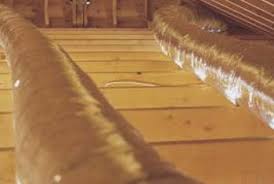
Cleaning ducts under negative pressure prevents household contamination. All the air your breathe at home has been circulated through the ductwork of your central air conditioning and heating system about seven times per day. Whatever’s in those ducts will probably be in the air you breathe. Because today’s energy-efficient homes are more tightly-sealed and less ventilated than structures in the past, the presence of airborne particulates including dust, lint, pollen, mold spores and bacteria may rise to levels that cause allergic or other symptoms in susceptible individuals. When an inspection shows that ductwork harbors contaminants, professional duct cleaning inducing negative pressure in ducts may be part of an overall strategy to improve indoor air quality. Access To Ductwork Effective duct cleaning requires access to the entire span of ductwork in a home. Where possible, this is accomplished via supply and return grilles located in rooms, as well as the diffusers, end caps and service openings that are incorporated in the ductwork itself.
Often these existing access points are not sufficient to reach the entire duct system for cleaning, however, so openings must be cut by duct-cleaning technicians then resealed after the procedure. Contaminants In Ductwork While some particulates may be floating loose in the airflow inside ducts, many contaminants are stuck to the interior of the ductwork due to static cling or other factors. For example, mold growth and bacteria inside ducts feed on humidity in the air and grow on interior duct surfaces. For this reason, ductwork must be agitated to remove contaminants. A number of devices are sent into the ductwork to accomplish this, from compressed air nozzles to rotary brushes. Connecting The Vacuum The agitation phase of duct cleaning necessarily dislodges large amounts of visible and invisible airborne particulates. To remove these loose particles through a central collection point without cross-contaminating the entire house, negative pressure is applied to the ducts. All room registers and openings in the ductwork are sealed except for an opening adjacent to the access point utilized for cleaning equipment.
An 8-inch diameter hose attached to a portable or truck-mounted vacuum capable of pulling as much as 10,000 cubic feet per minute is connected to this opening. Energizing the vacuum induces a powerful negative pressure inside the ducts. Cleaning Under Negative Pressure As cleaning agitation proceeds inside the ductwork, dislodged particulates are sucked out of the duct and into the vacuum receptacle. Working under negative pressure prevents contamination of household air during the cleaning process as well as later, when loosened contaminants left in the ducts might infiltrate living spaces after the system is restarted.
uv in air purifiersThe vacuum force itself also enhances the cleaning action of the tools.
baby city air purifierFiltering The Exhaust Duct-cleaning industry standards call for the negative-pressure vacuum exhaust to terminate in a high efficiency particulate air filter.
using wii lens cleaning kit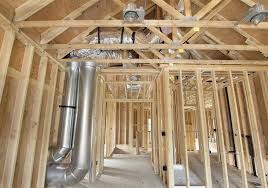
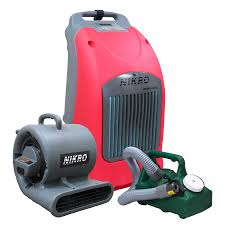
This cleans the exhausted air to medical-grade standards, removing 99 percent of airborne particulates down to a size of 0.1 microns. HEPA filtration effectively filters out virtually all inorganic particles as well as most microorganisms including mold, bacteria and many viruses. References National Air Duct Cleaners Association: What You Need To Know About Duct Cleaning PDFNational Air Duct Cleaners Association: Assessment, Cleaning And Restoration Of HVAC Systems PDF Photo Credits Comstock/Comstock/Getty Images Suggest a CorrectionNIKRO Industries, Inc., is a leading manufacturer of H.E.P.A. Filtered Vacuum Systems, Portable Air Purification Equipment, and Air Duct Cleaning Equipment and Supplies. All NIKRO HEPA filtered equipment has been designed for the safe and efficient collection of lead, asbestos, mold and other toxic and nuisance dust. NIKRO for a safer environment. Air Duct Cleaning Equipment & SuppliesMold-Flood Remediation EquipmentDehumidifiersH.E.P.A.
Filtered VacuumsInsulation Removal VacuumsAir Scrubbers / Negative Air MachinesDryer Vent CleaningHEPA Lead Vacuums & EPA RRP Compliance ProductsCommercial Industrial Vacuums (Without H.E.P.A. Filters)Pneumatic Vacuums/ Compressed Air Powered VacuumsMercury Recovery VacuumsInsulation Blowing MachineSmoke Dust and Fume ExtractionDuct cleaning is a methodical, straightforward process that delivers clear results. However, you might not know it from watching cheap, fly-by-night duct cleaning contractors work. Their spurious methods often take a fraction of the time as an accredited professional’s, and disappointing results can leave a homeowner wondering exactly what, if anything, was done. Unlike their industry’s outliers, legitimate duct cleaning contractors are eager to educate homeowners about the National Air Duct Cleaning Association’s (NADCA) standardized methods. These procedures establish how to properly clean ducts as well as registers, filters, plenums, evaporator coils, and air handlers—almost every component of a forced-air HVAC system—and the results will be obvious.
The methods used by accredited contractors are called source-removal techniques by NADCA, and they involve cleaning the ducts by hand and with compressed air tools while a vacuum collection device extracts dislodged dust and debris. Read on to understand more about the duct cleaning industry’s best practices. Step One: Inspect the Ducts A simple visual inspection of the ducts leading to the return and supply registers is important for two reasons. First, it’s a step homeowners can take themselves to assess the level of buildup in the ducts beforehand and confirm the difference after they’ve been cleaned. (A duct cleaning contractor will likely have cameras that can probe even farther into the ducts and show the full extent of the buildup prior to cleaning.) Second, when a professional performs the inspection, it affords an opportunity for the technician to check the ductwork for leaks or, in the case of flexible ducts, kinks; many duct cleaning contractors are also capable of making repairs and replacing ducts.

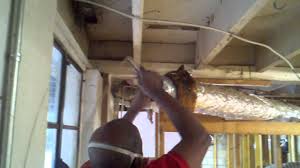
Step Two: Create Negative Pressure Basically, duct cleaning contractors use large, portable or truck-mounted vacuum collection devices to suck dust and debris out of your ductwork. However, before turning on the suction and scrubbing the ducts, the technicians must perform a few preliminary steps. First, they must hook the vacuum collection device’s large hose to a duct close to the air handler—the heart of your HVAC system. The technician will simply cut an access hole in the duct, insert the vacuum hose, and seal where they join as tightly as possible. (Note that your HVAC system includes a supply side and a return side—ducts that send treated air into the rooms of the house, and ducts that return air to the air handler. The supply side and return side are separate, and the duct cleaning process must be performed on each.) Even an extremely powerful vacuum collection device will be ineffective if the registers in each room of the house are uncovered, so the technician should seal those with adhesive covers.

Turning on the vacuum will now create negative pressure, and particles inside the ductwork will be sucked into the collection device as they’re brushed or blown loose. Step Three: Agitate the Dust Once the system is under negative pressure, the technician will uncover each register and clean the ducts one by one. One thing that distinguishes a NADCA-certified duct cleaning contractor from a fly-by-night is the amount of time each spends per register. Improperly trained technicians have been known to move on after a quick burst from an air compressor and a spritz of disinfectant; this technique is largely ineffective and usually results in dust being blown back into the room. Legitimate technicians will use rotating brushes, compressed air tools, and simple vacuum cleaners to ensure dust is dislodged and sucked into the vacuum collection device. Step Four: Clean the Rest of the System NADCA recommends cleaning the other components of the HVAC system as well, including the air handler’s blower motor, evaporator coil, and drain pan.